Category: Blog

  • Strengthening Pathways to Success: Raising Awareness, Building Futures

    Strengthening Pathways to Success: Raising Awareness, Building Futures

    Access to Information About Resources and Services

    A problem youth have is that youth are not aware of available services and resources. There is a lack of awareness in general. You hear about benefits for Vets, but you never hear about services for youth. There is no advertising campaign. A lot of people in Texas are not aware that if you were in foster care, you can apply for a waiver to pay for school, and you can qualify for housing help.

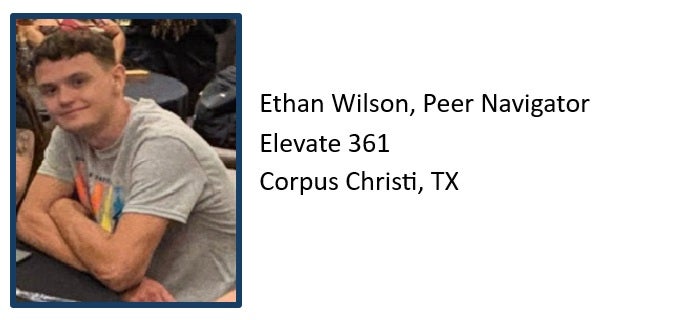
    Youth and young adults learn about resources and services from a trusted person or from a case worker after they enter a program. I had a buddy working at Elevate 361. He told me about getting help with rent and then I got a job at Elevate 361. Some programs offering services have ulterior motives – this is wrong. When I came to Elevate 361, I was hesitant – I didn’t trust people until they offered me a service I really needed to avoid homelessness. They listened and didn’t give opinions.  They asked what do you need and helped me get it. I now have a relationship with the community that is willing to help me.

    More folks need to be aware of programs and resources. Awareness of programs and resources should start in schools, high school, and junior high school students need to know what’s available for them and their friends.

    Also, staff need to focus the limited resources on people who are ready to work, those who can do their part. If they’re not motivated, they won’t get anywhere. Most youth are ready to work; however, if people aren’t willing to put in the work, we can’t help them…come back when you’re willing to work … there may be people who are ready to work on the waitlist.

    Going to college I had to do bunch of things on my own – my case manager couldn’t just call around to make things happen. My case manager treated me like an adult, showed me my options, gave me guidance, and helped with transportation. I had to do the work.

    Another important need for youth is parenting classes. Teen parents who get their kids removed need to learn how to get their kids back. Not everyone has a bad foster care experience, but I wouldn’t wish foster care on anyone. Teens need the tools to become good parents.

    Link Paid Work Experience to Meaningful Employment Options

    Workforce solutions paid for my work experience at Elevate 361. Some youth may need more time in paid work experience, and there needs to be a bridge to meaningful work. I could work in fast food or retail, but I’m ready for something more, a job where I can use the skills I learned at my paid work experience. After paid work experience is over, there needs to be a link to desirable work. I’ve done all this work, my record is clean, I’m mentally stable, I need a connection to what’s next for me. The current system is counterintuitive.

  • Honoring Ambition and Future Goals

    Honoring Ambition and Future Goals

    Many workforce development programs are funded to promote in-demand industry job training and placement. Those are important industries, and for people who want to work in these fields it’s a good match, but for people who want to pursue something different, the message this sends is, “We want to send you where we want you to be and not where you want to be.” This makes people feel devalued as individuals and unworthy of their personal goals. I feel like providers are at their best when they look at a person’s unique strengths and goals and what they have to bring to the table, and not solely what they [funded training programs] want you to do for their benefit. Preparing someone for employment and helping them get a job is a good thing no matter what, but it’s also important to support long term aspirations to ensure continued growth and motivation.

    A strength-based approach looks at individuals as a full picture. It’s valuable to meet the person where they are rather than just checking the box: “They got a job; my work is done.” Programs can force people into a career path that isn’t rooted in their positive qualities or what they want for themselves. Those seeking services are left on their own to find the first step toward their future hopes and dreams. The provider has to support those dreams, showing that they care about each person’s long term goals, and helping people work toward their vision for a future ideal life:  it’s meaningful and valuable to look at what the first step toward their goal is and assist them in mapping this out beyond the offerings of the workforce program.

    In the long term I think this approach makes people more successful. When applying for a job, you want to answer questions about the strengths you will bring to the table, or why you are excited and interested in the opportunity. It’s an advantage for people to be confident and genuinely interested in the job they are interviewing for. It will increase their chances of getting a steady, long-term position and offer them much more professional fulfillment during their time in the workforce.

    You can’t ignore the challenges people face, yet there is a way to acknowledge someone’s life situation without discouraging them from what they want to achieve. It is possible to address the obstacles people face and provide assistance without judgement, while also uplifting their unique value and potential. I think people are the best versions of themselves when they are supported and encouraged to unlock their potential and be passionate about what they are pursuing.

  • Relationship: Connection, Belonging, and Giving Back

    Relationship: Connection, Belonging, and Giving Back

    Many disconnected youth and young adults view non-profit programs as part of a system that has failed them. They don’t want to feel like a number being recruited into a program; they want connection and relationship.

    Text Box: Clear, consistent, and considerate communication makes a significant difference.

I want to emphasize the importance of being mindful of tone when approaching people. First impressions matter, especially when trust is being built. Many individuals have gone through difficult experiences, and while they may come across as guarded or even rude at times, it’s often because they have walls up rather than ill intent. Set in your own mind an approach of respect and kindness, regardless of how guarded the individual may appear.

    When first introducing yourself and your program, strive to have a high impact on the individual regardless of the level of commitment a youth or young adult is willing to make at the time. They may not be ready to make a commitment, but if the initial connection is true and they feel safe with you, they may circle back to you in the future. Here is a list of things staff can be mindful of when meeting disconnected youth and young adults:

    • Be yourself
    • Don’t sound robotic like a rehearsed advertisement
    • Know that program staff are not better than those seeking services, we are all the same
    • Avoid providing too much information at once, this can be overwhelming
    • Don’t be pushy, be respectful and patient
    • Let the individual take the initiative in their own time
    • Genuinely express that you are pleased to have met the individual
    • Be consistent with follow-up contacts
    • Ensure the program information presented on your website is accurate and complete, and update  staff contact information.    

    It can be difficult for mature adults to navigate systems for help. Youth and young adults have even more challenges in understanding programs, trusting program staff,  and sorting out why someone is interested in helping them.

    Offering incentives can encourage youth and young adults to learn more about a program and attend meetings; however, being part of a cohort of individuals with similar experiences and learning that you have something to offer others will create a sense of belonging and purpose.

    Cohorts of youth and young adults receiving services together or working together as an advisory group should meet regularly. Meetings need to include time for talking about their lives and helping each other. The group members are in the same room together, but each person brings their own network of relationships and information to share with the group to help and encourage each other. The group helps each other find their footing.

    Helping others in the community and acting as a bridge connecting others to services gives me a sense of how far I have come, how much I have learned and grown. I had an opportunity to meet  with  youth in a juvenile facility to help them see opportunities available in the community after release. This experience impacted my life. I no longer need an incentive to do this work: connecting, networking, and acting as a bridge to the community for others is who I am now.

    Many people see life as a puzzle and they are putting pieces together. Disconnected youth and young adults sometimes don’t even have a puzzle board to begin with. It takes time for them to see the puzzle pieces they want to pick up and begin to put their lives together.

  • Internship Stipends and 1099 Tax Filing Guidance

    Internship Stipends and 1099 Tax Filing Guidance

    Many advocacy organizations and training programs offer internships that pay participants stipends or hourly wages. For tax purposes, these earnings are often classified as self-employment income. Filing taxes using a 1099 may be unfamiliar territory for many. Despite programs providing tax preparation information and training, youth and young adults report being caught off guard when it’s time to pay their self-employment taxes.

    1.  Program participants prefer training provided by an organization’s in-house staff, someone the interns are familiar with and trust. This in-house person can then be available to assist with issues and questions after the training is completed and tax time approaches.
    2. What is the difference between a W-2 and 1099 when it comes to filing income taxes?
      1. How to read a 1099?
        1. When will interns receive the 1099?
        1. How will they receive the 1099: email attachment, post mail?
    3. How much money will the intern need to save to pay 1099 taxes?
      1. How do you calculate self-employment tax?
        1. Provide a worksheet that can be used to practice examples calculating self-employment tax, either as a group, in pairs, or individually.
        1. Guide each individual to determine the estimated amount of taxes that they will need to pay.
      1. Encourage interns to create a plan to save the money they will need to pay the taxes.
    4. Provide information on free tax preparation services in your area, such as public libraries and other community-based organizations.
    5. This trusted site can be used to file taxes on their own for free.
      1.  https://myfreetaxes.com/

    Internships that pay an hourly wage may consider hiring the interns as regular, temporary employees receiving W-2 earnings alleviating the 1099 self-employment tax filing burden and providing the status of employee for their résumés. In addition, as organizations acknowledge the value of the lived experience youth and young adult advisors bring to program evaluation and planning, identifying them as regular employees can also elevate the value experienced by youth and young adults: reinforcing their experience as valued members of your organizations team.